Most web scraping setups fail for one simple reason. The proxy layer cannot handle real conditions. You can have the right code and tools, but if your IPs are low quality, requests get blocked and data becomes unreliable.
Good web scraping proxies do more than route traffic. They help you run stable sessions, control rotation, and avoid constant bans during long tasks. This matters when you collect large datasets or work across multiple regions.
In this guide, you will find the best web scraping proxies for fast and reliable data collection, along with what each type is good for and what to fix when things stop working.
App CyberYozh
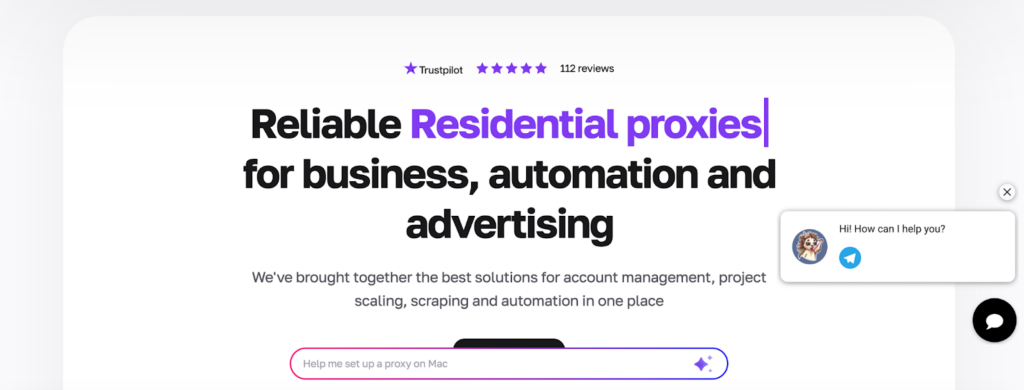
App CyberYozh works as an all-in-one infrastructure layer for web scraping, not just a proxy provider. Instead of stacking different tools, you get mobile, residential, and datacenter proxies in one place, with full control over sessions, rotation, and request behavior. This makes it easier to run stable scraping workflows without constantly fixing failures.
The platform provides over 50 million IPs across 100+ countries, with pools that are actively managed for quality. This directly reduces blocks, session drops, and inconsistent data. You can run sticky sessions when you need persistence or rotate IPs when scaling requests, depending on the target.
CyberYozh integrates with Scrapy, Playwright, Puppeteer, Selenium, and Postman, so you can plug it into your existing stack without changing your workflow. It also works with all major antidetect browsers, allowing you to align IP, fingerprint, and session behavior when running multi-account or browser-based scraping tasks.
Before running anything, you can check IP, phone, and card risk signals to avoid wasting time on bad setups. For developers and data teams, this means fewer failed runs and less debugging. Instead of chasing issues after they happen, you start with a setup that is already optimized for stability and scale.
App CyberYozh features
- 50M+ IP pool across 100+ countries for global scraping coverage
- High-quality IPs with clean history and controlled distribution
- 99.99% uptime for stable, long-running scraping workflows
- Mobile LTE and 5G proxies from real carrier networks
- Residential ISP (static) and rotating proxy options
- Datacenter proxies for speed-critical and cost-efficient tasks
- Sticky sessions and controlled IP rotation via API or dashboard
- Full API access for automation and large-scale workflows
- Integration with Scrapy, Playwright, Puppeteer, Selenium, and Postman
- Advanced fingerprint control to align browser, device, and network behavior
- Built-in IP, phone, and card risk checks before execution
- Unlimited mobile traffic options for high-demand scraping use cases
- HTTP, HTTPS, SOCKS5, and UDP protocol support
- Dedicated and shared proxy options based on workflow needs
- SMS activation and phone number rental in the same platform
- Balance-based payments with instant top-up options
- 24/7 support via Telegram and email in multiple languages
2. ProxyEmpire
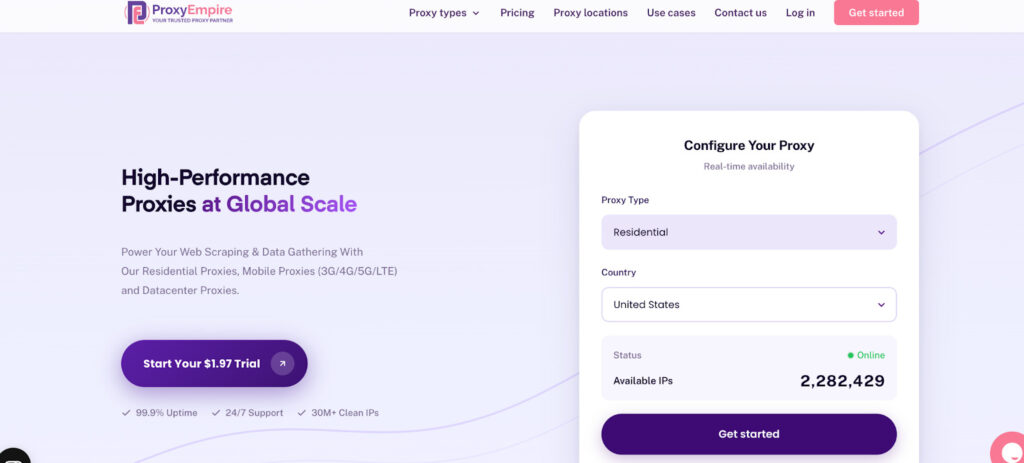
ProxyEmpire is often used when you need something quick to deploy without overthinking the setup. It works fine for smaller scraping tasks, especially when you are targeting specific locations or running moderate traffic. You can switch between rotating and sticky sessions depending on how strict your target is.
Once you start pushing more requests or running longer sessions, you may notice more inconsistencies. At that point, you will likely spend time adjusting rotation and retry logic to keep things stable.
ProxyEmpire features:
- Residential and mobile proxies with location targeting, but a smaller pool can limit scaling
- Rotating and sticky sessions, though long sessions may require extra tuning
- Pay-as-you-go pricing, which can become harder to predict with higher usage
- Basic API support, but fewer controls for complex automation setups
3. Bright Data
Bright Data is usually picked for larger projects where control matters. It gives you access to a wide proxy network and detailed targeting, which helps when scraping more protected websites. You can go deep into configuration, which is useful if you know exactly what you are doing.
The trade-off is complexity. Setup takes time, and costs can increase quickly once traffic grows.
Bright Data features:
- Large proxy network across multiple types, but pricing is higher at scale
- Advanced targeting options, though setup is not always straightforward
- Built-in scraping tools, which may feel unnecessary for simple use cases
- Strong API support, with a steeper learning curve for new users
4. Oxylabs
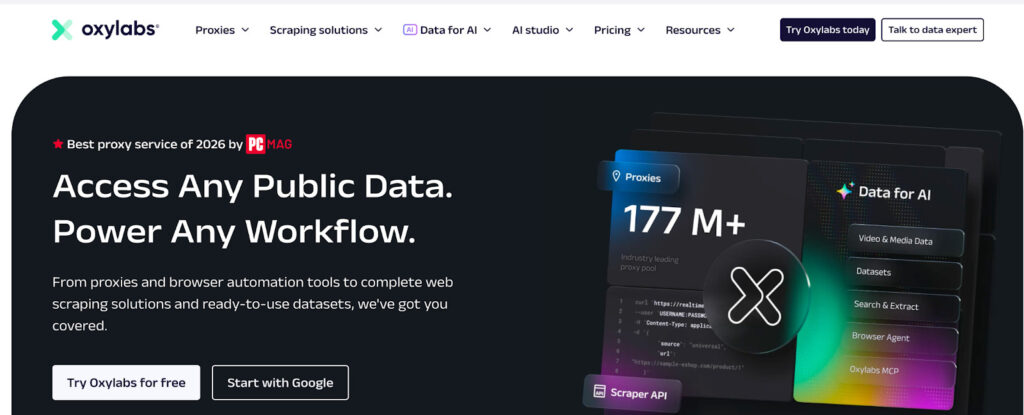
Oxylabs is more structured and feels closer to enterprise tooling. It is built for teams that run consistent, high-volume scraping jobs and need stability over long periods. Once everything is set up, it tends to run without much interruption.
It is not the fastest option to get started with. Smaller teams or quick projects may find it heavier than needed.
Oxylabs features:
- Large residential and datacenter proxy pools, but higher entry cost
- Stable performance for long-running scraping, though less flexible for quick setups
- Global coverage with strong uptime, but limited agility for testing
- API access for automation, designed more for structured environments
5. NetNut
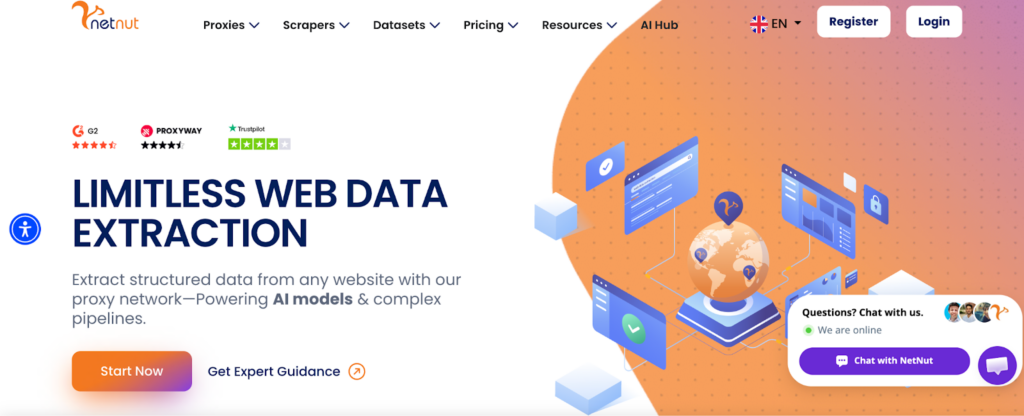
NetNut takes a different approach by focusing on ISP-based residential proxies. These are direct connections, which helps keep sessions stable. It is a good fit when your target reacts badly to frequent IP changes.
The platform stays focused on proxies, so you will not find many additional tools around it.
NetNut features:
- ISP-based residential proxies with stable sessions, but a narrower feature set
- Static and rotating IP options, though rotation control is less flexible
- Fast connection speeds, but fewer advanced configuration options
- Easy integration with scraping tools, without a broader ecosystem around it
Why you need proxies for web scraping
If you run scraping without proxies, it works for a short time. Then things start breaking. Not because your code is wrong, but because your requests all come from one IP. When you are continuously scraping websites for data, the first issue you hit is blocking. After a few requests, the target site starts rejecting connections. Sometimes you get CAPTCHAs. Sometimes requests just stop returning data.
Then come rate limits. You send too many requests from the same IP, and the site slows you down or cuts you off. This is common on e-commerce, search engines, and social platforms.
IP bans are harder to recover from. Once your IP is flagged, it stays blocked for hours or even days. Restarting your script will not fix it. You need a new IP with a clean history.
Geo restrictions are another problem. Some data is only visible from specific countries. Without proxies, you cannot access localized content, pricing, or search results.
Proxies solve these issues by spreading requests across multiple IPs. You can rotate IPs, run parallel sessions, and match locations to your target. This is what keeps scraping stable over time.
Types of proxies for web scraping
Residential proxies
Residential proxies use real IPs from internet service providers. They look like normal users, which makes them harder to block compared to datacenter IPs.
They are the default choice for most scraping workflows. You can run longer sessions, access more protected websites, and get consistent data without constant interruptions. The cost is higher than datacenter proxies, but the stability usually makes up for it.
Mobile proxies
Mobile proxies route traffic through real mobile carrier networks. These IPs are shared by many users, which makes them highly trusted by most platforms.
They are the hardest to block and work well on strict targets like social media or ad platforms. The downside is cost. Mobile proxies are more expensive, so they are usually used only when residential proxies are not enough.
Datacenter proxies
Datacenter proxies come from servers, not real users. They are fast, cheap, and easy to scale, which makes them useful for simple or low-risk scraping tasks.
The trade-off is detection. Many websites can identify datacenter IPs quickly, especially on protected targets. They work best when speed matters more than trust, or when the target site has fewer restrictions.
Final verdict
Web scraping success does not depend on tools alone. Most failures come from weak proxy setup, not code or logic.
Residential proxies work best for most scraping tasks. Mobile proxies help when targets are strict and sensitive. Datacenter proxies fit simple or low-risk workloads where speed matters more than trust.
If your scraping keeps failing, fix your IP quality and session control first. App CyberYozh fits as the infrastructure layer that improves stability and reduces blocking issues. It helps you run longer sessions and scale without constant interruptions.
The right setup is simple. Choose the right proxy type for your task, and make sure your infrastructure can handle real conditions.
FAQs
What is the best proxy for web scraping?
Residential proxies are the best choice for most scraping tasks due to better trust and stability.
Why do web scraping proxies get blocked?
Proxies get blocked when IP quality is low or too many requests come from one source.
How can App CyberYozh improve scraping results?
App CyberYozh provides high-quality IPs, stable sessions, and controlled rotation for better scraping performance.
Are datacenter proxies good for web scraping?
Datacenter proxies work well for fast, low-risk scraping, but are easier to detect on strict sites.
When should you use mobile proxies for scraping?
Mobile proxies are useful when scraping platforms that require high trust, such as social or ad networks.
Can App CyberYozh work with scraping tools like Scrapy or Playwright?
Yes, App CyberYozh integrates with tools like Scrapy, Playwright, and Puppeteer through API and automation workflows.











Leave a Reply