
Most people remember the first time a scientific concept stopped being abstract. It wasn’t when they memorized it. It was when they saw it move.
An orbit that finally traced a path instead of sitting as a diagram.
A reaction that changed color in real time instead of appearing as a formula.
A simulation where forces acted, not just existed.
That distinction matters more than it sounds.
For decades, science instruction relied on static representation layered over verbal explanation. The implicit assumption was that students would internally animate the system themselves. Sometimes they did. Often they didn’t. The failure wasn’t motivational – it was computational.
The human brain is not optimized for reconstructing dynamic systems from still geometry.
The cognitive cost of static instruction
When a student is shown a labeled diagram of DNA, they are not merely recognizing shapes. They are being asked to simulate torsional strain, hydrogen bond formation, helicase progression, and replication fork asymmetry – all inside working memory.
Working memory, however, has measurable limits. Cognitive load theory distinguishes between intrinsic load (the complexity of the material) and extraneous load (the burden imposed by presentation format). Static diagrams inflate extraneous load because learners must generate motion mentally. That reconstruction process consumes limited processing bandwidth.
Dynamic visualization changes the equation.
The brain’s motion-sensitive pathways – particularly within the dorsal visual stream – are tuned for temporal continuity. Causality becomes perceptible when events unfold over time. A white blood cell responding to chemotactic gradients is easier to understand when its trajectory shifts gradually in response to concentration fields, not when arrows are drawn beside it.
In other words: motion externalizes inference.
Why high-fidelity visualization was historically rare
Until recently, producing scientifically responsible animation required nontrivial infrastructure.
You needed:
- 3D modeling environments
- Physically plausible lighting models
- Particle systems or fluid solvers
- Time-based interpolation engines
- Rendering hardware capable of multi-pass computation
Even a simple atmospheric simulation could involve Navier–Stokes approximations, volumetric shading, and frame-by-frame parameter tuning. That level of production capacity rarely existed outside research labs or professional studios.
The constraint wasn’t imagination. It was pipeline complexity.
Over the past few years, that bottleneck has weakened.
Modern Image to Video AI systems allow educators to introduce controlled motion into static datasets without constructing full simulation stacks. This does not replace physics engines; rather, it lowers the threshold for visually representing time-dependent phenomena.
The key distinction is between decorative motion and constrained motion. The latter respects empirical boundaries.
Astronomy: From still frames to rotational dynamics
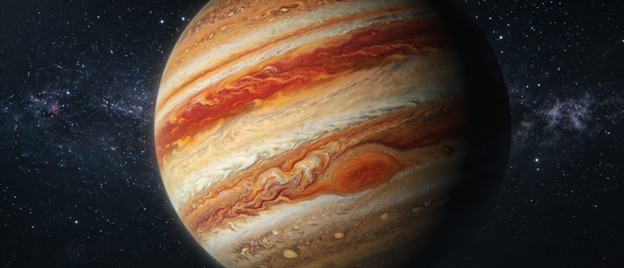
Take planetary atmospheres.
A static image of Jupiter’s cloud bands communicates texture and scale but not shear velocity, turbulence layering, or storm persistence. Students may intellectually understand that the planet rotates rapidly, yet the absence of temporal progression limits intuition.
When motion interpolation is introduced – even conservatively – band differentials become legible. Cyclonic structures exhibit persistence across frames. Rotational curvature becomes visually continuous rather than implied.
The underlying physics does not change. What changes is perceptual accessibility.
If rotational speed parameters align with known values (e.g., ~10-hour Jovian day), the visualization remains grounded. If they do not, it becomes fiction. The responsibility sits with the educator.
Molecular biology: Timing is the concept
In molecular biology, timing is not cosmetic; it is mechanistic.
Transcription and translation are not linear arrows in a pathway chart. Ribosomes progress codon by codon. tRNA molecules bind and detach. Energy transfer occurs through ATP and GTP hydrolysis cycles. Reaction kinetics are constrained by concentration gradients and thermodynamic favorability.
A static infographic collapses this temporal dimension.
Animating ribosomal progression at biologically plausible rates reveals ordering and dependency. Students see that translation is sequential and conditional – not a decorative loop.
Even relatively lightweight motion tools can clarify sequence dependency, especially when integrated carefully. Platforms such as Image to Video AI workflows enable instructors and communicators to introduce measured dynamism into diagrams that were once frozen in textbooks.
The value is not spectacle. It is sequencing.
Climate data: Temporal compression without distortion
Climate communication presents a different challenge: timescale mismatch.
Glacial retreat over 40 years is cognitively distant. A static map of ice coverage in 1980 and another in 2020 requires the viewer to perform comparison manually. Many do not.
Animating satellite time-series compresses decades into seconds. Motion exposes velocity of change. Pattern recognition improves because the visual system detects trajectory automatically.
However – and this is critical – interpolation must respect dataset resolution. Artificial smoothing or exaggerated transition curves can introduce epistemic distortion. Responsible visualization preserves raw signal characteristics while enhancing perceptibility.
Visualization is amplification, not alteration.
The independent communicator under algorithmic constraints
Modern science communication increasingly occurs outside institutions. A graduate student with a microphone and editing software can reach millions. The constraint is no longer distribution; it is retention.
Audience analytics reveal steep drop-offs when frames remain static for more than a few seconds. Attention is partly biological. The visual system tracks motion.
Subtle environmental animation – drifting particulates in a marine biology segment, orbital progression in astrophysics explanations, intracellular transport in cell biology – reduces perceptual stagnation. It anchors gaze while narration carries conceptual density.
Previously, achieving that level of visual continuity required professional compositing expertise. Now it can be integrated into lightweight editing workflows. The barrier between institutional production and independent scholarship narrows.
This does not eliminate the need for rigor. It redistributes creative capacity.
The risk: When motion becomes misleading
There is a nontrivial ethical boundary here.
When visualization tools become accessible, the temptation to exaggerate increases. Turbulence can be intensified for dramatic effect. Molecular collisions can be accelerated. Scale can be distorted to emphasize contrast.
These decisions are not neutral.
Scientific visualization must obey:
- Conservation principles
- Scale proportionality
- Validated behavioral constraints
- Accurate temporal relationships
If these parameters are ignored, the result is persuasive imagery divorced from evidence.
Used responsibly, however, dynamic visualization reduces inferential burden without sacrificing precision. It scaffolds understanding rather than replacing it.
Education as energy transfer
The ultimate objective of science education is not polish. It is activation energy.
Curiosity requires an entry point. When systems that were previously invisible – molecular motion, atmospheric circulation, tectonic displacement – become perceptible, the threshold for engagement drops.
Students ask better questions when they can observe process rather than imagine it abstractly. Inquiry follows perception.
Visualization does not substitute for mathematical formalism or experimental validation. It prepares the ground for them.
Making the invisible visible is less about cinematic appeal and more about reducing cognitive friction. And when friction decreases, participation expands – not only among future specialists, but among anyone attempting to understand the mechanisms shaping the world they inhabit.










Leave a Reply