In 2026, technology isn’t something you “add on” later. It’s the framework everything else rests on. The right systems streamline operations, lower risk, and give businesses a real competitive edge. The wrong ones quietly drain time and money. This guide focuses on the technologies that actually move the needle, with practical insight you can use.
Cloud-native infrastructure and multi-cloud strategies
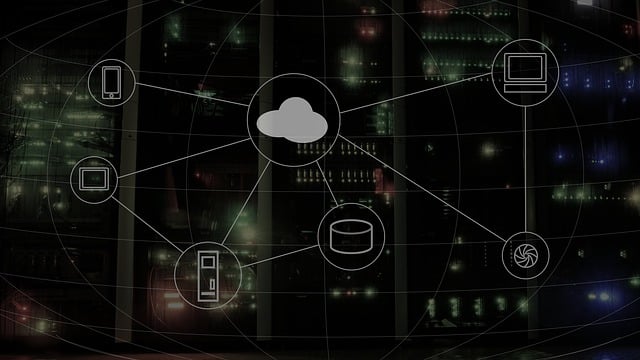
Most organisations now use the cloud in some form. But many still rely on ageing, monolithic systems or put all their eggs in one provider’s basket. That approach is starting to show its limits.
In 2026, multi-cloud architecture is no longer a nice-to-have. It’s a resilience strategy.
Why does it matter? Because it reduces dependency on any single vendor. It improves uptime when one platform stumbles. And it allows teams to match workloads to the most cost-effective or high-performing environment available.
Several technical components make this possible. Container orchestration remains central, with Kubernetes continuing to set the standard for managing distributed applications at scale. Service mesh technologies such as Istio and Linkerd add another layer of control, handling traffic routing, observability, and security between services without hard-coding rules into applications. Cloud-agnostic storage sits underneath it all, abstracting data so workloads can move between providers without expensive rewrites.
With this flexibility comes complexity. Security has to evolve alongside it. Zero-trust network models, identity-based access controls, and automated patching are no longer advanced options. They are baseline requirements for operating safely in a multi-cloud world.
AI-driven operations and predictive analytics
AI isn’t just for labs anymore. It is a useful tool. Demand forecasting, anomaly detection, and decision loop automation are all possible with predictive analytics.
2026 deployments focus on:
- Time-series forecasting for sales, inventory, and capacity planning.
- Anomaly detection in logs and transaction streams.
- Process automation using trained models integrated into workflows.
This translates to quantifiable improvements in operational efficiency. For instance, by dynamically modifying reorder points based on real-time data, a merchant can lower stockouts and overstocks.
The true value lies in fusing computational findings with human expertise. People should be helped by tools, not replaced by them.
Sustainable and energy-efficient IT
Green tech isn’t a trend. It’s regulation and cost control.
Energy-efficient servers and data center designs cut electricity use. On the software side, efficient coding and optimized compute workloads reduce carbon footprint and cost.
Metrics matter. Companies must measure:
- Power usage effectiveness (PUE)
- Carbon usage effectiveness (CUE)
- Energy per transaction
These KPIs will be standard parts of IT reporting by 2026. Investors and regulators both demand accountability.
Advanced cybersecurity with real-time detection
Threat actors are faster and more sophisticated. Perimeter defenses alone fail.
Modern security relies on:
- Behavioral analytics: Detects unusual patterns.
- Endpoint detection and response (EDR): Monitors devices in real time.
- Extended detection and response (XDR): Correlates telemetry across endpoints, network, and cloud.
Automation is critical. Security teams cannot investigate every alert manually. Playbooks that automatically isolate compromised systems reduce dwell time and limit damage.
Encryption at rest and in transit must be standard.
Integrated financial tech and compliance automation
Financial operations are increasingly regulated and data-intensive. Manual processes are slow. Mistakes are expensive.
This is where systems like lease software matter.
Lease accounting involves complex compliance standards (ASC 842, IFRS 16). Manual tracking of terms, amortization schedules, and disclosure requirements invites errors.
Technical priorities include:
- Automated lease classification and reporting.
- Centralized data repository with audit trails.
- API integration with general ledger and ERP systems.
Automation reduces bottlenecks. It also improves controls and audit readiness.
Augmented collaboration platforms
Remote and hybrid work persists. But 2026 collaboration tools go beyond video calls and chats. They layer context and intelligence into communication.
Expect:
- Virtual shared workspaces with persistent project data.
- Contextual search across meetings, documents, and messages.
- AI-assisted summarization and action-item extraction from transcripts.
Productivity is increased by these systems. By emphasizing relevance and removing noise, they also lessen cognitive stress.
Integration is essential. Workflows are broken up by standalone tools. Platforms need to establish secure, single-sign-on connections to key systems, such as task organizers, calendars, and document repositories.
Data governance and ethical AI frameworks
Data is an asset. But unmanaged data is a liability.
Data governance programs ensure:
- Classification and cataloging of datasets
- Clear ownership and stewardship roles
- Policy enforcement for access and retention
In parallel, ethical AI frameworks define how models are trained, tested, and deployed. Transparency, fairness, and explainability are central.
This goes beyond just compliance. It increases partners’ and customers’ trust.
Hybrid edge computing for real-time workloads
Some applications cannot tolerate latency. Edge computing brings processing closer to the source.
Industries like manufacturing, logistics, and IoT deployments benefit most.
Edge strategies in 2026 focus on:
- Lightweight edge nodes with local caching
- Secure connectivity back to central systems
- Containerized workloads that can shift dynamically
This architecture reduces latency and bandwidth costs while improving reliability when connectivity is intermittent.
Conclusion
Tech investments must be measurable, secure, and integrated. Cloud infrastructure, AI, cybersecurity, and financial automation are foundational. Companies that align their tech stack with strategic goals will outperform those that chase buzzwords.
Technical work is involved in implementation. However, setting the proper priorities lowers risk, saves money, and produces genuine value. That is 2026’s bottom line.








Leave a Reply