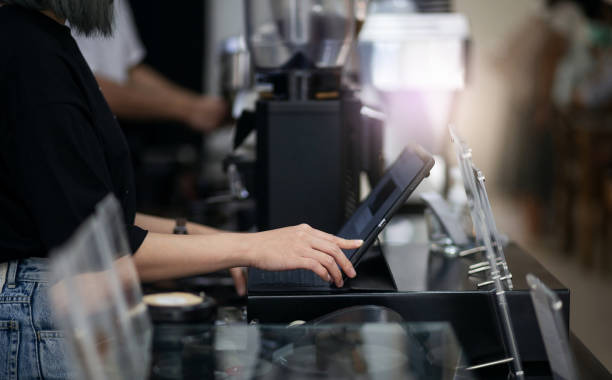
Running a restaurant is not restricted to taking orders, cooking food, and printing out bills anymore.
Restaurants today deal with dine-in customers, take-out orders, online ordering, digital payments, inventory management, employee rotations, and customer data processing simultaneously. A modern Point Of Sale (POS) system helps the management of all these tasks from a single platform.
A restaurant POS system is more than just a billing machine. It acts as the core technology that interfaces with the front counter, kitchen, payment, inventory, reporting dashboard, and third-party platforms. It adds more control, speed, and accuracy to restaurant owners and managers operations.
What is a restaurant POS system?
A restaurant point of sale system is a mixture of hardware and software designed to control every one of the orders, bills, payments, menus, employee transactions, sales history, and stock.
The rudiments of a basic point of sale setup could consist of a cash drawer, card machine, receipt printer, barcode scanner, and billing terminal. Other possibilities for a more advanced system are waiter tablets, kitchen display screens, cloud dashboards, CRM software, and API-to-API integration.
It would be a restaurant’s main computer system, if you will. All orders, payments, discounts, tax records, table updates, and sales are recorded in the system. This simplifies the restaurant team’s job of working more organized.
How a Restaurant POS System Works
Once the order is placed by the customer, the cashier/waiter will enter the details into the POS. The order contains food products, the number of units, table number, modifiers, and special instructions like “less spicy” or “no onion.” The order is sent directly to the kitchen via a kitchen printer or kitchen display system once ordered.
Meanwhile, the billing information is also stored at the counter. Once the customer has completed their order, the POS can easily calculate the bill along with taxes, discounts, service charges, and payment information. This decreases the amount of manual calculation mistakes and the time spent during rush hours.
Why POS for restaurants is important
A dedicated POS for Restaurants is designed according to the daily needs of food businesses. In contrast to standard billing software, it can handle all the orders on tables, takeaways, kitchen routing, menu modifiers, tax settings, online orders, and staff permissions in one place.
This kind of POS aids a restaurant during peak hours to operate more quickly. Also, it maintains the front counter, dining area, kitchen, and management board linked. This means owners have greater visibility of all their sales, orders, payments,s and stock movements.
API integration in POS systems
Many modern point-of-sale (POS) systems have APIs that allow them to integrate with other software programs. An Application Programming Interface (API) is a method for two systems to exchange data without manual action.
For instance, a restaurant POS can connect to online ordering apps, payment systems, accounting software, loyalty apps, stock control systems, and customer relationship management platforms.
If a customer orders on a delivery platform, the API will send the order straight to the POS as well. It is received in the kitchen, the bill is generated, and the stock is updated without manual input.
It can be helpful if a restaurant places orders from several sources. It eliminates duplication of effort, no lost orders, and a single sales database.
Cloud infrastructure and data synchronization
Cloud-based POS systems are now in use at many restaurants. With a cloud POS system, information is not just stored on a local computer, but on secure remote servers as well. This provides owners and managers with reports, real-time sales, menu information, and staff activity on any connected device.
Cloud infrastructure is especially beneficial for multi-branch restaurants. Owners can control various outlets from one dashboard, and compare the performance of sales through each outlet, branch by branch. The menu, price changes,s and tax settings can also be pushed throughout locations.
Another important characteristic is the offline ability of a good POS system. If the Internet connection is down, the restaurant should be able to accept orders and pay bills anyway. Once it’s connected, the system will be able to sync the offline data to the cloud server.
Better kitchen coordination
One of the main advantages of a point of sale system is kitchen coordination. It can be easy to get confused in hectic restaurants when ordering by verbal instructions or handwritten notes. A point of sale system provides real-time communication of order details to the kitchen.
Other restaurants are employing kitchen display system hardware and displaying orders on screens. The following screens will show the names of the items, their table number, the preparation time, special notes, and order status. Food handlers can check food as prepared, ready, or served. This enhances the communication flow between the waiters, cashiers, and chefs.
Faster billing and secure payments
Bill faster and more accurately with a pos system. It will automatically calculate the price of the items, taxes, discounts, service charges, and payment amount. Customers can make payments via cash, card, UPI payment, wallet, QR code, or online payment gateway.
If the POS is connected to a payment terminal, the amount of the bill can be sent directly to the payment terminal. Once you have paid, it will be automatically logged into the system.
Security is also a concern. User permissions, manager-approved discounts, audit logs, and secure payment processing are features of a reliable POS system.
The management of stock and inventory.
Another important aspect of restaurant POS systems is inventory tracking. Specific items like rice, flour, vegetables, oil, spices, drinks, and packaging material require regular monitoring. You can link the sales of your menu with the use of your stock through a Point-of-Sale system.
For instance, if one biryani is sold, the system would be able to deduct the ingredients, such as rice, spices, oil, and packaging materials, according to the recipe. This will enable the owner to identify if certain ingredients are used more than others and determine the time for restocking.
Avoiding wastage and stock shortages, low-stock alerts, and vendor records, purchase entries, and stock reports are all beneficial to the restaurant.
Inventory and stock management
Menus at restaurants are updated frequently as a result of new foods, seasonal foods, offers, or pricing. Managers can update menu items, categories, prices, taxes, and combo offers from the back office using a POS system.
The POS also generates beneficial reports. The owner has the ability to view daily sales, popular dishes, busy hours, payment methods, canceled orders, staff performance, and inventory usage.
Menu Management and Reporting
Menus change frequently as new items are added, items are used based on seasons, offers, and price changes. A point-of-sale system enables managers to seamlessly update menu items, categories, prices, taxes, and combo offers from the back-end.
The POS also generates valuable reports. Owners can monitor daily sales, popular dishes, busy periods, types of payment, cancelled orders, staff performance, and inventory usage.
These reports aid restaurants in making better decisions. The restaurant can, for example, train more staff and order more snacks during the busy time of 5 pm to 7 pm, if snack sales are high here during those hours.
Final thoughts
Nowadays, a restaurant’s POS system is a crucial component in the restaurant’s operation. It combines order taking, in-house kitchen functions, billing, payments, inventory management, menu management, cloud reporting, and API integration into one system.
It’s easier to run a day-to-day business for smaller restaurants. It’s a solution for growing restaurants to enable online ordering, multiple branches, improved stock control, and robust reporting. The right POS system can help restaurants avoid mistakes, provide faster service to their customers, and help them to run their business more confidently.









Leave a Reply