DevOps and platform engineering are supposed to make software delivery easier. But as companies grow, the opposite can happen.
Deployments get slower, infrastructure gets harder to manage, and developers spend more time dealing with tools and processes instead of building products.
This is where the right engineering partner can help.
Some companies focus on improving developer experience, while others are better suited to large cloud transformations or broader software modernization. Here are three DevOps and platform engineering companies worth looking at in 2026.
What should you look for in a DevOps partner?
A good DevOps partner should do more than introduce new tools. They should understand what’s slowing your team down and find practical ways to improve it.
Look for experience with areas such as CI/CD, cloud infrastructure, automation, observability, and platform engineering. Just as importantly, the company should be able to work with your existing setup rather than pushing you to replace everything.
Forte Group
The right choice ultimately depends on your problem. Some teams need faster deployments, others need more reliable infrastructure, and some simply want to make development easier for their engineers.
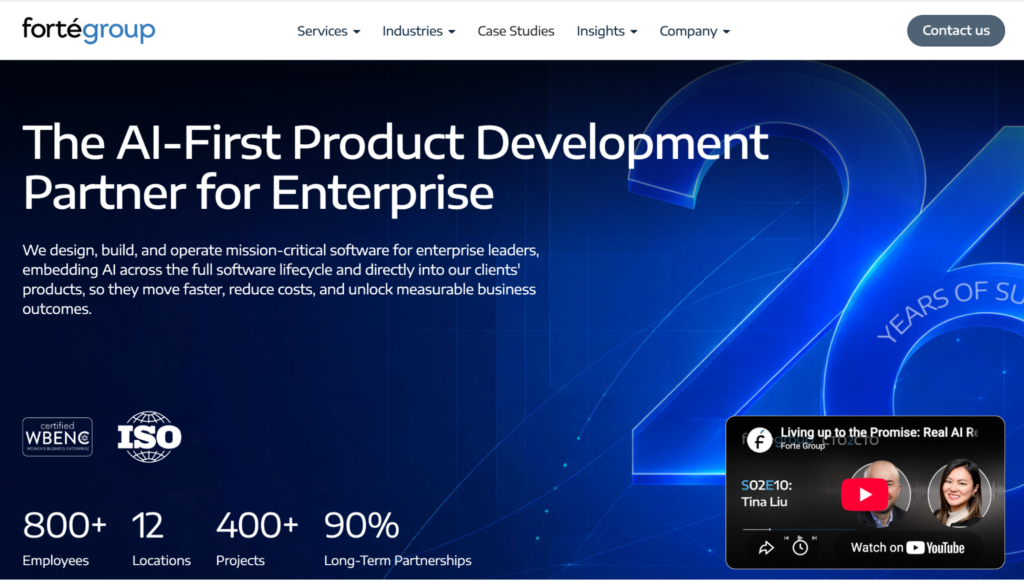
Forte Group combines DevOps and platform engineering with its wider software development expertise.
The company has 800+ employees across 12 locations and has worked on more than 400 projects. Its DevOps services are built around three main areas: DevOps engineering, platform engineering, and Site Reliability Engineering (SRE).
For DevOps, Forte helps with cloud adoption and migration, CI/CD, containerization, Infrastructure as Code, observability, and security.
Its platform engineering services focus more on making life easier for developers. Forte builds and improves internal platforms that simplify application delivery and reduce repetitive work.
SRE covers the reliability side, including monitoring, incident management, infrastructure automation, performance tuning, and disaster recovery.
Key features
- CI/CD and delivery automation
- Cloud adoption and migration
- Infrastructure as Code
- Containerization
- Internal platform development
- Observability and monitoring
- Site Reliability Engineering
- Security and compliance support
What Do the Results Look Like?
Forte also shares some useful results from real projects.
Its work for a major national healthcare company led to a reported 47% reduction in DevOps spend. For OppFi, Forte reports a 400% improvement in velocity on DevOps tasks.
Another project with Redwood Logistics included performance improvements that reduced user sign-in time by more than 85%.
Forte can also work with a company’s existing cloud, CI/CD, observability, and security tools, so adopting its services doesn’t necessarily mean rebuilding everything from scratch.
Limitations
Its broad engineering approach may be more than necessary if you’re only looking for help with one small DevOps task.
Best for: Companies that want DevOps and platform engineering to be part of a wider software development or modernization project.
Thoughtworks

Thoughtworks puts a lot of focus on the people actually using the platform: developers.
Its approach to platform engineering is based around treating an internal platform like a product. Developers are the users, so the platform should make their work simpler rather than adding more tools and processes.
Self-service is a big part of that idea. Instead of developers constantly relying on infrastructure teams, common tasks can be turned into reusable workflows they can access themselves.
Key features
- Internal developer platforms
- Self-service infrastructure
- Automated cloud provisioning
- Deployment and testing pipelines
- Monitoring
- DevOps consulting
- Developer experience improvements
Thoughtworks also recommends starting small instead of trying to build a huge internal platform immediately. A company can begin with a minimum viable platform and improve it based on how developers actually use it.
Limitations
Thoughtworks doesn’t provide standard public pricing for these services.
Its approach can also involve changes to engineering processes and ways of working, so it may be more extensive than what you need for a small infrastructure project.
Best for: Organizations that want to improve developer experience and build internal platforms around their engineering teams.
EPAM
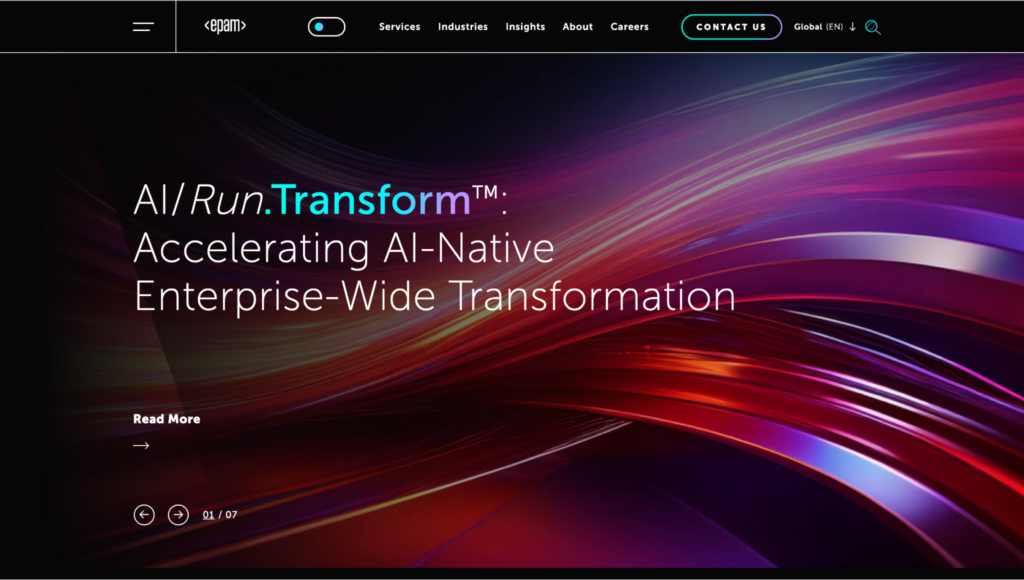
EPAM is another option, particularly for larger organizations dealing with complex cloud environments.
Its DevOps services cover strategy, CI/CD, cloud-native delivery, automation, security, and Infrastructure as Code. EPAM also works on internal platforms that give developers self-service options for deployment, monitoring, and application management.
Key features
- DevOps strategy and transformation
- CI/CD automation
- AWS, Azure, and Google Cloud
- Kubernetes and Docker
- Infrastructure as Code
- Platform engineering
- Monitoring and observability
One example comes from EPAM’s work with Bacardi. EPAM says the DevOps automation platform it created reduced average application deployment time by as much as 65%. One application’s deployment went from roughly two hours to around 40 minutes.
Limitations
EPAM doesn’t list standard pricing for enterprise DevOps projects.
It’s also a large engineering provider with a wide range of services, which may be more suitable for larger transformation projects than small, standalone DevOps tasks.
Best for: Enterprises that need DevOps and platform engineering as part of a larger cloud transformation.
Final thoughts
The right choice depends on what is slowing your engineering team down.
Forte Group is a strong option if you want DevOps, platform engineering, and SRE connected to broader software development and modernization.
Thoughtworks makes sense if developer experience and self-service platforms are the priority. EPAM is better suited to larger organizations working through complex cloud and DevOps transformations.
Before choosing a provider, look at the actual bottleneck first. That will tell you much more than simply comparing long lists of DevOps tools and technologies.








Leave a Reply