Artificial Intelligence is no longer something that is seen in automated coding or data analysis, but is changing the paradigm for all forms of digital content production.
Introduction
Recently, generative AI has moved from text analytics to other areas that were considered exclusive to human capability: visual storytelling and composing music. An artist can now use AI to animate an image or develop lyrics for a completely composed musical piece. The use of AI in this aspect is opening new frontiers for artists and marketing professionals to try out new ways of doing their work.
We will explore how AI is revolutionizing image animation, song production, analyzing tools that can take static content, as well as texts, and turn them into animated content, all without users needing any technical knowledge related to these fields.
AI-powered image animation: Bringing still photos to life
Static images are a traditional core channel for digital communication, with the disadvantage of missing the aspect of motion. Image animation software has addressed this problem with the help of artificial intelligence, which replicates realistic motion based on the analysis of the images.
Platforms such as Animate Image AI allow individuals to transform a still image into a video sequence through a few clicks. The platforms employ advanced technology that analyzes objects within an image, including faces, items, and background buildings, to create motion paths that appear realistic.
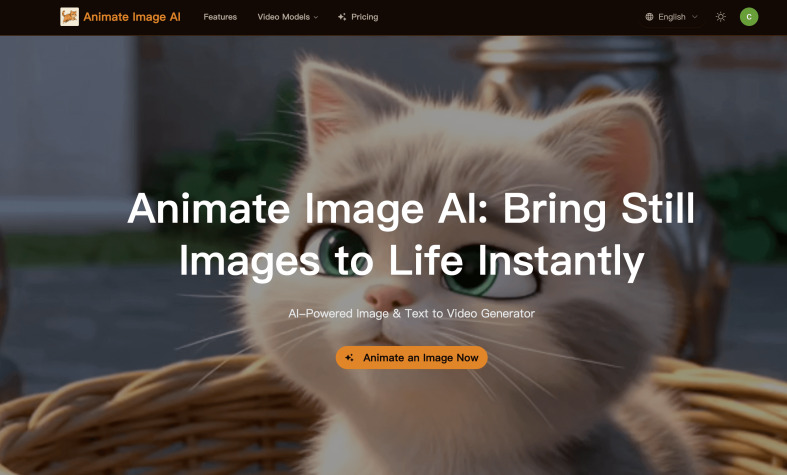
There are various scenarios where AI animated photos are used:
- Social content creation: Different animated videos that catch the eye in the social feed.
- Marketing visuals: Dynamic pictures that capture attention.
- Storytelling: Bringing character portraits and landscapes to life.
- Interactive experiences: Adding animations to art or history photos.
Where traditional video editing with AI stands out from traditional video editing is that it has the capacity to animate without requiring hand-made production on a pixel-by-pixel basis. The only work you need to do is upload your image with a description of the effect you would like to see, and it happens.
Going from words to music: AI-powered songwriting
Songwriting, however, is only the first step: turning these lyrics into an entire song generally entails composing, production, and mixing. The AI technology can alter this reality.
Technologies such as Lyrics to Song AI enable the user to feed the system the written lyrics. The AI system then generates a complete song with all the musical elements, including the vocals. This happens because the AI system interprets the meaning implied in the lyrics.
Some of the uses of this technology:
- Demo creation: This service is for the rapid creation of DEMOs to pitch projects.
- Content background music: Make royalty-free music for content like videos and podcasts.
- Creative exploration: Exploring different genres and musical types.
- Education and inspiration: Assist songwriters in building prototypes for concepts that may not have been completed otherwise.
What makes this so potent is the fact that it has become easy enough for anyone with lyrics in their head to get a professional audio file in minutes.
Navigating challenges and best practices for AI creative tools
Although these creative applications with AI offer amazing capabilities, there are certain issues that need to be taken into consideration by artists.
- Quality vs. control: One can expect variations in the quality of the output produced by artificial intelligence, where fine tuning may require a trial-and-error process.
- Ethical use: When creating media, one should always use other people’s work ethically and not infringe on copyrights. It is always important to have the right to input media and to share the output responsibly.
- Collaboration Between Human and AI: AI works best as a collaborator, not as a replacement for human beings. The judgment, sensibility, and knowledge of stories possessed by human beings can be very useful for making creative decisions.
- Technical limitations: There might be some limitations in certain tools when it comes to abstract ideas or highly specialized art styles, which could be overcome with a mix of tools or post-production editing.
Implementing these best practices ensures that artists leverage AI as well as their craft, art, integrity, and ethical principles to their fullest potential.
How these tools fit into broader creative ecosystems
AI image animation and AI music creation point to a trend in creative tech: lowering barriers to artistic expression.
- Accessibility: Solutions such as Animate Image AI and Lyrics to Song AI enable access to creative tasks that required professional software or training.
- Speed and iteration: AI technologies speed up the time span between idea and output, enabling the artist to experiment with several versions and improve them quickly.
- Multimedia storytelling: Animation graphics paired with original songs open a completely new range of storytelling to social media, advertising, education, and entertainment.
By abstracting technical details and providing conceptual-level input capabilities, such tools are enabling people to think about vision and expression instead of workflows and toolchains.
Conclusion
Development in the field of AI has enabled the visual or audio artists with the capabilities that were unachievable before. From animating images to composing a full song from the words of the song, the capabilities of artificial intelligence are changing the way we produce multimedia content.
Artists of varying levels of expertise can implement the capabilities of dynamic images in motion as well as the ability to compose a song. With these technologies still developing, it can only get more seamless and expressive in terms of merging imagery, sound, and storytelling.