The market for online stores has never been more crowded. Many people who shop online say they feel overwhelmed by the huge assortment of goods and customisation options that different stores offer. Some people don’t buy anything because they can’t decide which product best meets their needs. At this point, the power of interactive store settings becomes clear.
Picture yourself in a real store where a knowledgeable salesperson listens to your needs, asks the right questions to gain a sense of your tastes, and then guides you to the perfect buy. Most online stores do not give customers the human touch that they want when they shop online. Is this the answer? It employs an automated product advice quiz to transform uncertain online shoppers into confident buyers.
Why your Shopify store needs a product recommendation quiz
There is no getting around the facts. Glaze Digital found that an impressive 80% of customers are more likely to buy from a brand that gives them a personalised experience. When people take a product recommendation quiz, the total conversion rate goes up to 40.1%, meaning just over 4 out of 10 people become leads once they click the start button.
What is really interesting about this information is that quizzes and other interactive content can lead to twice as many sales as passive content. Consider how engaged your customers are in the buying process when they interact with your brand and answer questions about their tastes. People do not just look around without a plan; they actively work to find the perfect goods for themselves.
Adding a quiz to Shopify to help customers choose product recommendation quiz is a great idea because it makes them feel less stressed by all the options. If you give people too many choices, like fifty different skincare treatments or one hundred different clothing options, they often get upset. A well-made quiz would narrow down the choices based on the person’s wants instead of letting them look around aimlessly.
The science behind quiz conversions
The results of the Interact study are interesting because they show how well quizzes work. They looked at 3,568 quizzes and found that 65% of people who take them answer all of the questions. Starting with online sales, the average rate of conversion from start to lead is 37.6%.
How do you come up with these wonderful numbers? Psychology is a crucial field. People care more about something when they take the time to answer questions. They cannot wait to see the results of all their hard work. This psychological idea, combined with the hope of receiving personalised suggestions, creates a strong motivation to complete the test and explore the recommended items.
Customisation research backs the concept up. According to WiserNotify, personalised product suggestions can increase sales by 288%. There is no mistake: showing customers items that fit their specific needs and tastes increases conversion rates by almost three times.
How the best product recommendation quiz transforms shopping experiences
The best product quiz does more than just offer things; it goes above and beyond. Because customers give it to them voluntarily, the zero-party data it collects is crucial. You can use this information to help your business.
These are three significant benefits:
Enhanced customer understanding
With each quiz answer, you can find out something new about your clients. Do they care about price or do they like more expensive items? Which is more important to them: being eco-friendly or being simple to use? With this information, you can divide your viewers into different groups and start more targeted marketing campaigns that work better.
Increased average order value
RevenueHunt says that stores that use product advice quizzes often see a Average Order Value (AOV) increase by 20%. Do not read this. When customers get personalised ideas, they are more likely to buy something and even add more items that go along with it to their cart.
Reduced return rates
Returned items go away when personalised product suggestions meet customers’ real needs. The quiz helps you decide what to buy by setting realistic goals and seeing if the product fits your needs.
Real-world success: Function of beauty’s personalization approach
The Function of Beauty is a great example of how personalisation through quizzes can lead to paid purchases. Their quiz-to-personality subscription experience brings in more than a million quizzes a year, which is 80% of their income. Customers take a quiz about personalised body care that asks them about their hair type, goals, and personal preferences. The quiz results in unique formulas that have the customer’s name on the bottle.
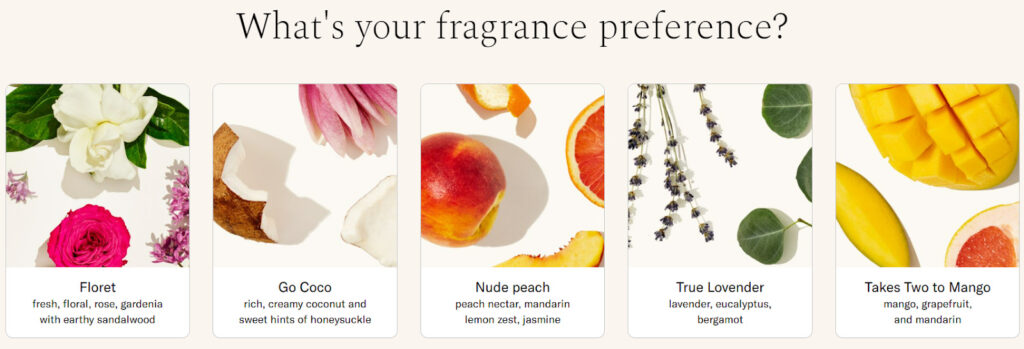
This approach works because customised items deserve a higher price. People are more likely to pay more for a product that they think was made just for them. This quiz asks about the texture of your hair, the amount of moisture in your scalp, your hair goals, your favourite scent, and even your favourite colour. Because of these words, Function of Beauty makes unique items that you cannot discover anywhere else.
For example, the results show that designed tests work:
- Customers who ask for customised formulations spend a lot more than customers who buy generic options.
- Customers do not care as much about price when they can customise goods, which makes them more unique.
- As long as people think something is worth more, they are more likely to buy extras and high-end options.
- Custom goods usually have lower return rates because they are made to order.
Take Function of Beauty’s Body Quiz to see for yourself how powerful customisation can be.
Building your product recommendation quiz Shopify experience
To create an effective quiz for selecting Shopify products, you do not need to know a lot about technology, but you will need to be able to plan ahead. This is what makes quizzes that get many answers different from those that don’t:
Start with clear objectives
Figure out what you want to achieve before you make the poll. Are you going to:
- Make it easier to find products so that people do not have to leave their shopping carts.
- Get people’s email addresses by getting their phone numbers and addresses.
- Get feedback from buyers to help you introduce changes to the goods.
- Bring more people to your site and make them stay longer.
The types of questions you ask and the replies you give will depend on your goals.
Design questions that matter
The best product advice quiz uses questions that really help narrow down the choice of products. Do not ask about things that are not relevant. The logic behind the suggestions should have a reason for each question.
For example, a quiz about skincare might ask about the person’s skin type, main skin problems, and desirable ingredients. A furniture quiz may ask about your income, room size, and style. Asking these questions affects the suggestions for goods.
Keep it short and engaging
Different businesses have different ideas about how many questions should be in quizzes with 5 to 30 questions can achieve similar completion rates. Most online shopping quizzes work best with five to ten questions. People will not pay attention if you talk for too long.
Real results from product recommendation quiz implementation
Now let’s talk about real numbers. Even though data from each client is different, overall numbers show a success.
Research from Eventflare shows that people spend 47% more time interacting with interactive material than with static pages. There is a clear link between higher rates of involvement and higher conversion rates, which is why personalised interactive formats see a 30–40% rise in conversion rates.
Shopify shops in particular could see their conversion rates rise from the normal 2% to 5% or even higher with a product recommendation quiz. Even though it is a small change, it makes your return rate more than 100% better.
Let us look at an example: your store gets 10,000 unique visitors a month. If you raise your conversion rate from 2% to 5%, you will make 200 to 500 sales a month. That means 300 more customers without spending more on ads.
Top features to look for in quiz apps
You should not trust any game maker online. Ensure that the tool you use for the product suggestion quiz in your Shopify store includes the following essential features:
Conditional logic
This way, the game can learn from the answers that people give. If someone says they have dry skin, you should not ask them about ways to treat sticky skin. Conditional reasoning makes it possible to create a user experience that is natural and fits their needs.
Seamless Shopify integration
The quiz and your list of products should quickly sync. You should not have to change the quiz suggestions by hand every time you change the product details or add new ones.
Analytics and insights
You should write down what is working. Keep an eye on info like:
- How fast does the quiz start?
- Number of accomplishments
- The most common ways to answer
- The goods that people liked the most
- Things bought after getting advice.
Over time, you can use what you have learned to improve the quiz.
Email marketing integration
The best games connect with services like Klaviyo and Mailchimp to get people to give them their email addresses. You can then follow up with customers who don’t buy right away and recommend suitable products.
Mobile optimization
Even though 70–75% of e-commerce traffic comes from mobile devices, only 2.8% of that traffic sells, while 3.2% of that traffic comes from desktop devices. If you want people to take your quiz on their phones, it needs to look great and work perfectly.
Common mistakes to avoid
Even when they try their best, many business owners make these major mistakes:
Use of too many personal questions Early: Do not ask someone for their email address until you have shown that you are worthy. Before you email your clients your ideas, let them see what you have found.
Avoid asking questions that are overly difficult to answer. Make it easier to choose an answer. Studies indicate that the average person can concentrate on three to seven different things at the same time. There should not be fifteen choices for responders.
Not caring about the quiz results: The answers that people provide on tests are very useful information. You should frequently review the data and adjust your product plan based on customer feedback.
Implementation strategy for maximum impact
To add a product suggestion quiz to Shopify, you need to do more than just add an app. Take a look at this thorough approach:
Test multiple quiz types
Try out different types of quizzes to see which one your audience likes best:
- Tests of personality that connect customer traits with product features
- There are diagnostic tests that can find problems and give tips on how to fix them.
- Personality tests that match what people want with their chosen styles
Promote your quiz strategically
Do not hide your score. It should be easy to find on your homepage, in the menu, and in email marketing. After someone has been on your site for at least 30 seconds, you might want to add pop-ups.
A/B test everything
Look at the results page layouts, quiz names, and question patterns of different quizzes. You can see a big difference in conversion rates and finish rates by making small changes.
The future of E-commerce personalization
There will be no end to discovering products in a dynamic way. AI is getting smarter, and quizzes are getting more difficult at the same time. Contentful says that the e-commerce personalisation software market will grow from $263 million in 2023 to $2.4 billion in 2033.
The most up-to-date quiz sites now use AI to sort through user comments and make their suggestion algorithms better over time. By looking at conversion rates and making the right changes to algorithms, they figure out which product matches lead to real sales.
Frequently Asked Questions
How long should my product recommendation quiz be?
Ten to five questions is a suitable number. While tests with few questions work best, ones with thirty questions can still do well as long as each one is useful. Use various question types and progress bars to keep your users interested.
Would it be possible for me to use a quiz to suggest products at work?
Yes, I would say. Quizzes are very helpful for almost every type of e-commerce business, including fashion, cosmetics, supplements, home goods, and technology. This technique is especially important when working with goods that are complicated or have a lot of different features.
How can I get people to fill out my survey?
It should be right in the middle of your homepage, and you should promote it through email, social media, and planned pop-ups. Ensure that the benefit is prominently displayed, such as “Find your right match in 2 minutes”. Price cuts and other incentive schemes can also get more people to participate.
I know that the quizzes taught me useful things, but what should I do with them?
Use quiz results to divide your email lists into groups, make better suggestions, find goods that are missing, and improve your marketing messages. You can make your thinking work better by recording which products you recommend that sell well.
How much is an app that tells you what products to buy?
With most Shopify quiz apps, the basic ones cost $20 to $30 per month, and the paid ones cost $100 or more per month. All of them offer free samples. Sometimes, even small conversion lifts can pay for themselves.