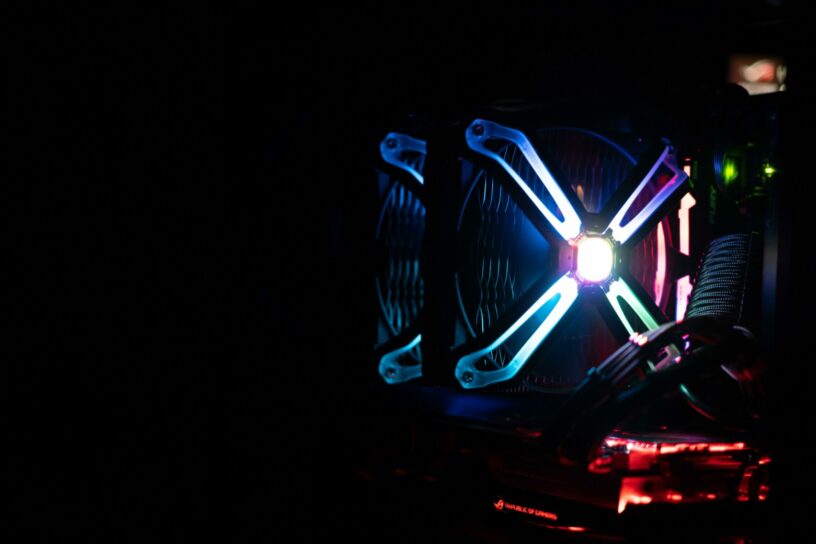
Across countries like the UK, there are all manner of industrial settings, commercial buildings, data centres, and even domestic control panels, where cooling fans are used to help keep electrical equipment safe and reliable.
The ubiquity of cooling fans in such environments is easy enough to understand. After all, overheating is one of the biggest threats to electrical and electronic systems, and the use of cooling fans can be a straightforward and cost-effective way of tackling this risk.
Such equipment, then, plays a central role in maintaining airflow, removing heat from components, and bolstering the longevity of critical infrastructure.
However, if you are reading this as someone with responsibility for industrial machinery, a server room, or even “just” a home PC, there may be a lot of things you don’t understand about how cooling fans protect your electrical equipment from damagingly high temperatures.
Why is overheating such a problem for electrical equipment?
Heat is inevitably generated by the normal operation of electrical components such as transformers, variable speed drives, inverters, power supplies, and circuit boards. This heat comes mainly from electrical resistance and switching actions.
In an enclosed space like a steel or plastic electrical cabinet, heat builds up rapidly due to a lack of natural airflow.
In the absence of proper cooling:
- Every 10°C rise above the recommended operating temperature can roughly halve many electrical components’ lifespan. This is a well-established “rule of thumb”, often referred to as “the 10°C rule”, or a specific application of the Arrhenius equation.
- Overheating brings about such consequences as insulation breakdown, solder joint failures, capacitor degradation, compromised efficiency, unexpected tripping, nuisance faults, and even – in worst cases – complete failure or fire risks.
- Even in a country like the UK that isn’t exactly associated with scorching weather, summer temperatures in enclosed plant rooms or outdoor cabinets can reach as high as 30°C to 35°C.
How do cooling fans work to stop overheating from happening?
Cooling fans provide forced convection. This is a much more effective way to remove heat than relying on natural convection, whereby warm air rises passively.
The basic principle of how these devices operate is simple:
- The fan draws cooler ambient air from outside the enclosure. This is usually through a filtered inlet at the lower part of the cabinet.
- This fresh air passes over the hot components, absorbing heat.
- Now warmed, this air is subsequently expelled from the top or side of the enclosure.
This continuous exchange of air disrupts the insulating boundary layer of hot air that forms around components; it means that stagnant warm air is replaced with cooler air.
As a consequence, temperatures inside the enclosure can be kept about 10°C to 25°C lower than would have been the case in the absence of forced airflow. The exact result here will depend on such factors as fan size, airflow rate (measured in m3/h or CFM), and enclosure design.
With regard to the UK, most installations in this part of the world use filter fan units (sometimes referred to as “filter fans” or “fan-and-filter combinations”). These typically comprise:
- An axial fan that moves air parallel to its axis for high volume at low pressure.
- A washable or replaceable filter mat on the intake side to prevent dust, dirt, and insects from getting in.
- A grille or louvre on the exhaust side to guard against unauthorised access, at the same time as permitting air to exit the device.
Never underestimate the relevance and impact of the right cooling fans
When it comes to protecting electrical equipment from the “silent killer” of overheating, a well-chosen cooling fan can be a both straightforward and dependable way to do it.
Amid the variable climate and often highly demanding industrial environments of the UK and similar parts of the world, cooling fans can make an invaluable contribution as part of a proactive and responsible maintenance approach.











Leave a Reply