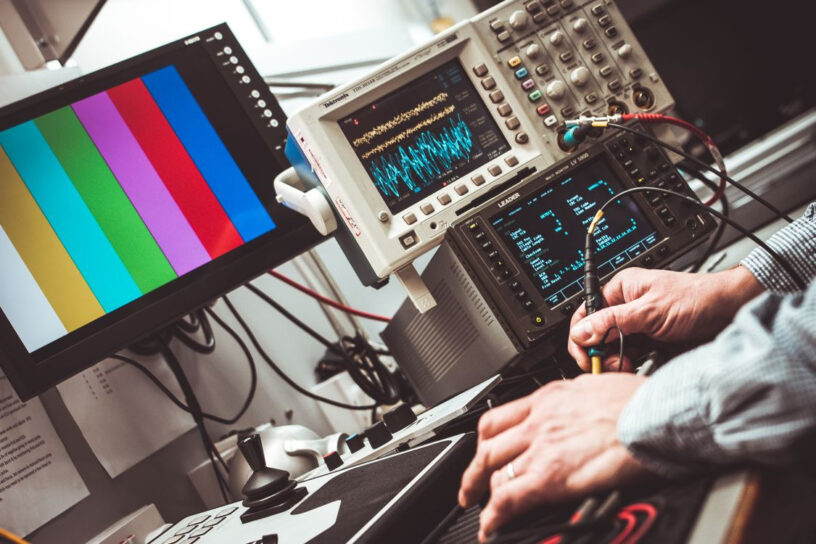
Online content is getting more and more competitive, and producers cannot afford to rely solely on powerful visuals to maintain the interest of audiences. Voice, music, and soundscapes are now playing a significant role in making memorable experiences. With the advent of AI technology, music production is no longer about simple loops and MIDI-based productions but about systems that can produce detailed audio directly. The shift includes the creation of raw waveforms, which assist AI in generating richer vocals, instruments, and entire compositions.
Models such as Mureka V9 are pushing this technology further by combining high-fidelity audio generation with accessible creative workflows. For both novices and professionals, it allows the creation of a refined song with less technical ability and less time in the recording studio.
From digital notes to realistic sound
Earlier AI music generators usually used a symbolic format like MIDI. These systems define notes, timing, instruments, and other musical instructions instead of producing the full audio signal. The raw waveform synthesis approach works more directly on the representation of the actual sound.
Understanding waveform synthesis
A waveform is the form that contains the descriptive features of audible audio being recorded. When an AI system generates it directly, it provides more information to operate on to create vocals and instruments.
Why it matters
The strategy can aid in lessening the unnatural sound of previous AI music instruments. It aims to achieve more natural-sounding audio with more detail, dynamics, and musical expression.
The Mureka V9 model
The Mureka V9 model is a support system to the generation of high-fidelity music, used by Tad AI. The technology does not merely assemble predetermined musical codes but instead creates whole audio experiences using the outputs of the creators.
Mureka V9 brings a new layer of fidelity
The worth of raw waveform synthesis is further made apparent with regard to what is actually heard by the listener. An accomplished song is more than just notes and tempo. It consists of vocal character, instrumental texture, rhythm, transitions, and nuances of sound. A generation method that uses waveforms provides the model with a means of producing these elements as audio and not merely as symbolic commands.
To creators, this can reduce the gap between a raw idea and a track that can be used. A person who has not had formal training in production can articulate an idea and experiment with a completed musical product. It makes more advanced music creation more affordable and provides experienced users with an alternative means of generating ideas in a hurry. The larger change is noteworthy since AI music is no longer about creating simple background loops but rather actualized full-fledged compositions.
Smart mode turns ideas into complete songs
Technical quality is not the only important aspect of AI music creation. The workflow also determines how useful a generator becomes. The Smart Mode of Tad AI is aimed at creators who need to get a song done in a few seconds without the need to control every single creative choice.
Prompt-driven creation
The system can translate the idea into a full composition when the user describes a concept, a mood, or a musical direction.
Smarter lyrics
Its advanced lyric engine is designed to generate cohesive verses and choruses that reflect the emotional weight of the prompt. This can assist creators in getting rid of writer’s block.
Automated workflow
Smart Mode also offers quick style selection they include tags and automated cover-art mapping that minimize the number of individual steps required to create a track.
Custom mode gives creators structured control
Fast generation is useful, but creators often need more direction. Custom Mode is a slower, more intentional procedure, as it lets the user specify high-level parameters of the composition desired.
Genre and vibe
Genre and Vibe tags are used to define the general musical identity and emotional nature of the track.
Instrument and scene
Instrument and Scene instructions give more background information on what the AI is supposed to sound like and what the world should look like.
Rhythm and references
Rhythm tags can be used to influence the musical direction, and further creative context can be offered by custom audio references.
Longer creative instructions
Users can also enter up to 3,000 characters of custom text. These controls are architectural constraints, not micro-timeline editing, and therefore dictate the entire composition, not a particular moment at a particular second.
A broader audio ecosystem for commercial creators
The generation of AI-generated music is becoming more and more tied to other digital audio generation. Tad AI goes beyond simple song editing with AI Rap, AI Covers, and realistic Text-to-Speech. Such capabilities can assist in various content formats, including social video and podcast content, as well as advertisements and other digital projects.
Commercial use is another important consideration. Tad AI markets its generated music as royalty-free, which permits creators to make use of eligible tracks in business initiatives. Its production style is fashioned to create new sounds by synthesis instead of simply pasting and cutting existing samples. This means that creators have a chance to create original music on YouTube, TikTok, and Spotify and still review the relevant licensing materials and platform policies.
This has led to a more approachable experience when it comes to sound production: high-fidelity production, scalable workflows, and friendly choices to creators who require unique audio without conventional studio creation.
Conclusion
Synthesis of raw waveforms is assisting to get AI-generated music beyond simple, synthetic-sounding music. Using technologies like Mureka V9, creators can experiment with more in-depth vocals, instruments, and entire songs with just ideas. Smart Mode accomplishes the faster process with automated workflows and intelligent generation of lyrics, whereas Custom Mode offers orderly control with genre, vibe, instrument, scene, rhythm, text and audio references.
The change enables the production of sophisticated music to be more approachable to novices and provides more refined creators with new avenues of idea generation. With the development of AI-based audio technology, applications like a song generator could become a viable component of contemporary content creation, enabling artists to create unique sounds to use in videos, podcasts, social media, and commercial ventures.











Leave a Reply